Surf Trauma Stations for Boating Safety
Quickly accessible hemorrhage control is the difference between survivable injury and a fatal outcome on open water. Severe bleeding from propeller strikes, line entanglement, punctures, or blunt trauma can overwhelm victims within minutes. Well-equipped surf trauma stations fitted with marine-grade tourniquets, stop-the-bleed supplies, and purpose-built mounts turn vessels into resilient platforms for immediate response.
Common injuries, core components, and marine-rated tools

Open-water incidents often produce deep lacerations, amputations, arterial bleeds, crush injuries, and hypothermia. Propeller and hull-strike wounds may expel large volumes of blood; torn clothing and wet decks complicate compression. A robust trauma station prioritizes hemorrhage control, airway management, and thermal protection. Key elements include proven amphibious tourniquets with corrosion-resistant hardware, occlusive dressings that adhere when wet, compression dressings sized for major limb wounds, and chest seals for penetrating torso injuries. Materials must resist UV, salt, and mechanical abrasion; grade 316 stainless and UV-stable polyester webbing are industry standards.
Modern marine-rated tourniquets feature ratcheting buckles that allow rapid, repeatable tightening under load while remaining compact enough for leash mounting on a board or rail. Amphibious designs are rubberized to maintain grip when submerged and include locking mechanisms to prevent accidental loosening. Integrating these devices with surfboard, paddleboard, and boat-specific mounts ensures a device can be reached and applied within seconds, which is critical: uncontrolled arterial bleeding can lead to death in three to five minutes.
Placement, installation, training, and upkeep
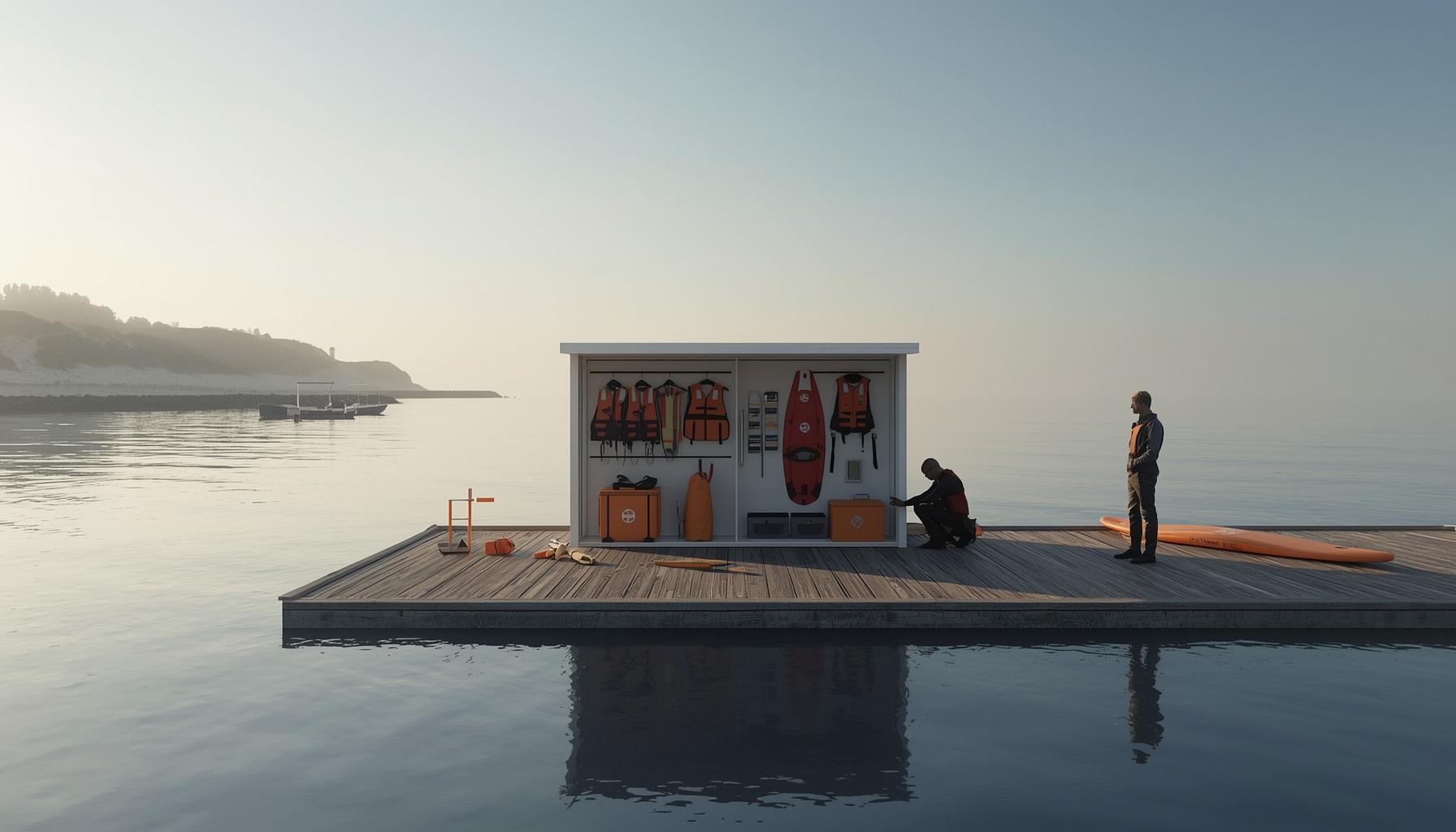
Strategic placement emphasizes visibility, unobstructed access, and redundancy. Keep a primary station near the helm and a secondary station where gear tasks concentrate, such as the bow or dive deck. Mounting hardware must be through-bolted into structural members or use certified rail clamps rated for dynamic loads. All fasteners should be 316 stainless steel and fittings sealed with marine-grade threadlocker and bedding compound to prevent corrosion and loosening.
Installation best practices require securing amphibious tourniquets in quick-release holders that orient the working end outward. Leash systems for boards and rails should include breakaway force set above expected dynamic loads but below that which would prevent retrieval. Surf trauma stations integrate with first aid kits, EPIRB stowage, and flotation so responders find everything in the same footprint during high-stress situations.
Training protocols establish competence for crew and recreational users. Mandatory drills cover rapid tourniquet application, packing and direct pressure, chest seal placement on a wet torso, and casualty packaging for evacuation. Recommended cadence is quarterly hands-on drills aboard vessels and an annual refresher for all operators. Record retention should log training dates, participants, and competency outcomes.
Maintenance schedules reduce failure risk. Inspect tourniquets monthly for webbing degradation, buckle corrosion, and retention of instruction labels. Replace devices after deployment or if any component shows UV cracking, fraying, or salt-crystallized moving parts. A manufacturer-recommended service interval is typically three to five years for non-deployed devices; more frequent replacement is warranted in high-UV, high-salt exposure environments. Simple checks after each outing—rinsing hardware with fresh water and blowing dry—extend service life significantly.
- Critical inspection points: buckle function, webbing integrity, mounting hardware torque, waterproof packaging seals, expiry dates on adhesive products.
Regulations, drills, procurement, signage, and compatibility

Legal responsibilities vary by flag state and region; commercial operators frequently fall under maritime safety regulations that require first aid equipment and trained personnel. Liability exposure increases if accessible hemorrhage control is absent when foreseeable risks exist. Insurance underwriters often recognize documented trauma station programs and training as risk mitigation.
Procurement and budgeting should account for initial outfitting and lifecycle replacement. A reasonable starting budget for a small charter vessel is comparable to a maritime medical cabinet, with unit costs for amphibious tourniquets ranging by feature set. Visual signage and high-contrast labels accelerate access during stress. Use photoluminescent backing where night operations occur.
Innovations in materials and mechanisms—such as ratcheting buckles with redundant locks and amphibious tourniquet designs—improve reliability in marine conditions. Compatibility with safety electronics matters: ensure trauma station placement does not obstruct VHF radios, EPIRB access, or AIS transponders needed for rapid evacuation coordination.
Adapting trauma stations to recreational surfing, paddleboarding, diving, and commercial fishing requires modular kits sized to payload and available mounting points. Environmental considerations drive material choices: salt-spray testing, UV aging data, and packing that resists mold and biofouling are essential. Clear standard operating procedures and a maintained logbook satisfy both regulatory inspections and internal governance, ensuring readiness when the unthinkable happens.